
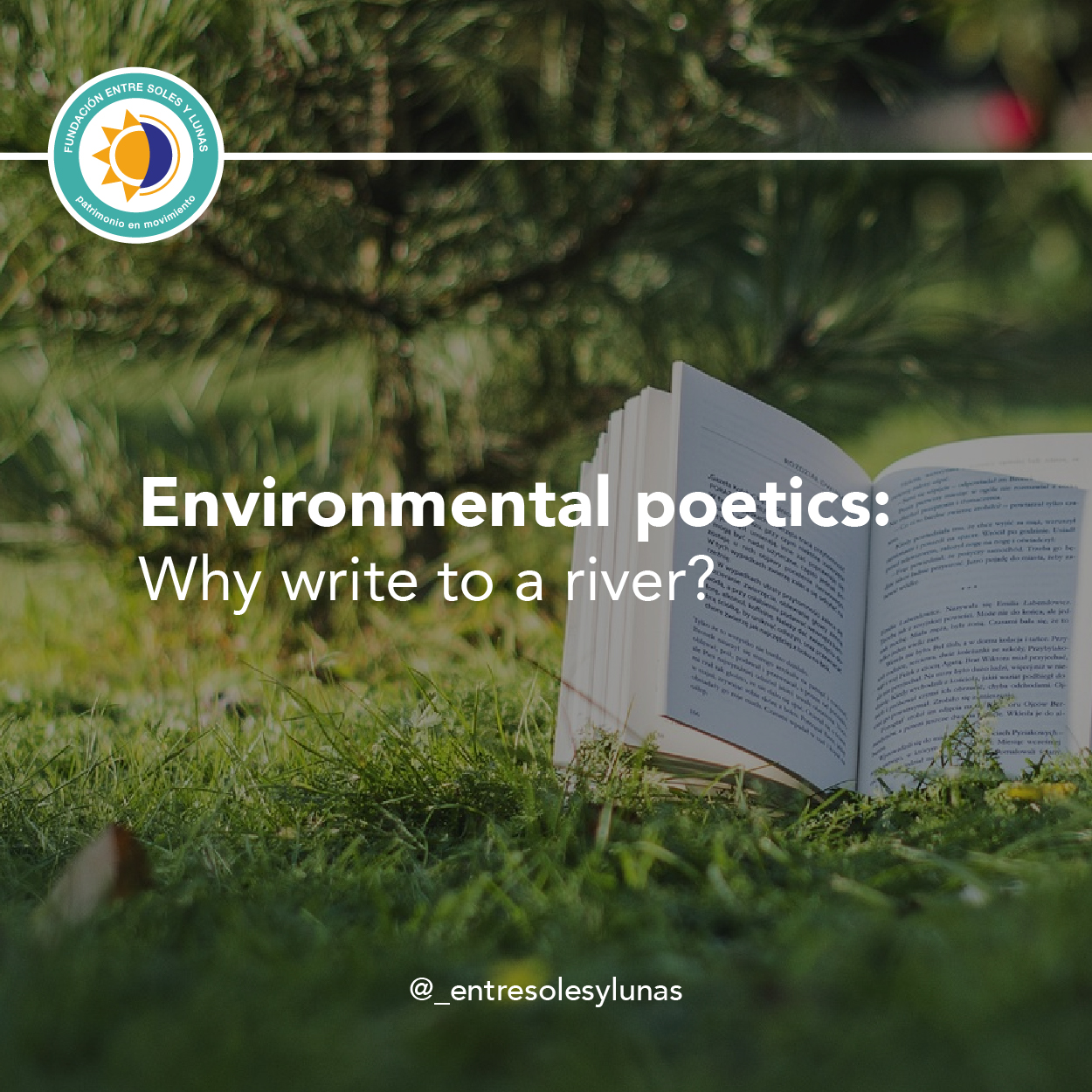
“Look intently at the landscape.
Fixedly
With the whole body,
and whatever remains
of the soul”
Aldo Parfeniuk
Art translates and problematizes, through poetic eyes, both the beauty and the rawness of reality. In artistic action lies a creative power that is entirely human and original. The possibility of a thought, a feeling, an idea, a criticism, an image that did not exist before, begins to come into being. Art declares and shows, materializes a context, the atmosphere of a moment.
Who speaks today of the earth's ailments, of the forced migration of species, of the sky’s colors after the bombs?
Name the House
In the 1980s, the term “ecocritics” began to emerge from American and European universities, referring to a movement that studied the relationship between literature and the environment and how it was represented in works. It means, how the verbal arts named the environment we inhabit. What we say and how we engage with that which surrounds us and is not merely human.
Shortly after, around the 2000s, the concept of “ecopoetics” or ecology-oriented poetry, emerged from the above. It is that space of poetry committed to the contemplation of nature, to the critique of human actions upon it, to the absolute intersection between the earth and the individual and the culture built around it.
The word ecopoetics is composed of two suffixes: eco (oikos) meaning home or root, and poiesis, meaning creation. The creative power of words in poetry allows us to name things and thus begin to design a new home-world. Ecopoetics draws on observation, on questions, on anxieties, and on beauty
that means living today on a planet besieged by our own violence, but one that we cannot—nor should we—renounce. Poetry, as an art form, is one of the many ways humans survive and react to a reality we want to change.
Where are we going with all this poetry?
Mexican writer Mónica Nepote says that ecopoetics is one tool—among the many that exist—for facing the environmental crisis. So, is poetry going to save the world? Of course not. Perhaps it does not even have concrete answers on how to do so, but it proposes diverse ways of naming what happens and what is urgent. It is an artistic commitment to the issue. “Language is how we materialize the world”, says Monica, and for many, words, education, and raising awareness through them, are a way to take action on the problem.
If we promote more voices to narrate their stories and contexts, to share their feelings and their denouncements, we will be pluralizing dialects, prose, ways of speaking, and the possibilities for thinking and regenerating the world.
…and as Archibald MacLeish says
a poem must be without words,
like the flight of birds,
Yes,
and like falling rain,
like passing wind.
A poem must not speak
but sing,
not prove
but show (that is why
it must be written
with silent words).
A poem is nothing more
than a children’s tale
in their parents’ bed;
a kiss at the movies,
everything
we have already lost
and yet remains with us.
Aldo Parfeniuk
https://letralia.com/entrevistas/2023/07/08/aldo-parfeniuk
https://share.google/EiAS5Ijuhs32CcUFb
https://share.google/n6hVpAebW7P6yaPHF


Leave a reply