
By Julieta Escala, Translated by Ángela Suárez
Ouro Preto (formerly known as Vila Rica), designated as the “Imperial City” by Emperor Pedro I of Brazil, was the capital of the state of Minas Gerais until nearly 1900. As the nerve center of gold routes and slave exploitation during the colonial era, this city of boundless wealth became a living monument to the origins of Brazil.
The city is characterized by the aesthetic quality of its colonial architecture and with its Starting in 1930, a series of public policies aimed at preserving and recognizing the cultural, historical, and artistic value of Ouro Preto’s works and buildings gradually advanced until, in 1980, the city became the first cultural property in Brazil to be registered on the World Heritage List. This milestone reflects a community that embraced the weight of its history and used it to shape its identity.
Tradition Takes Root in Hearts
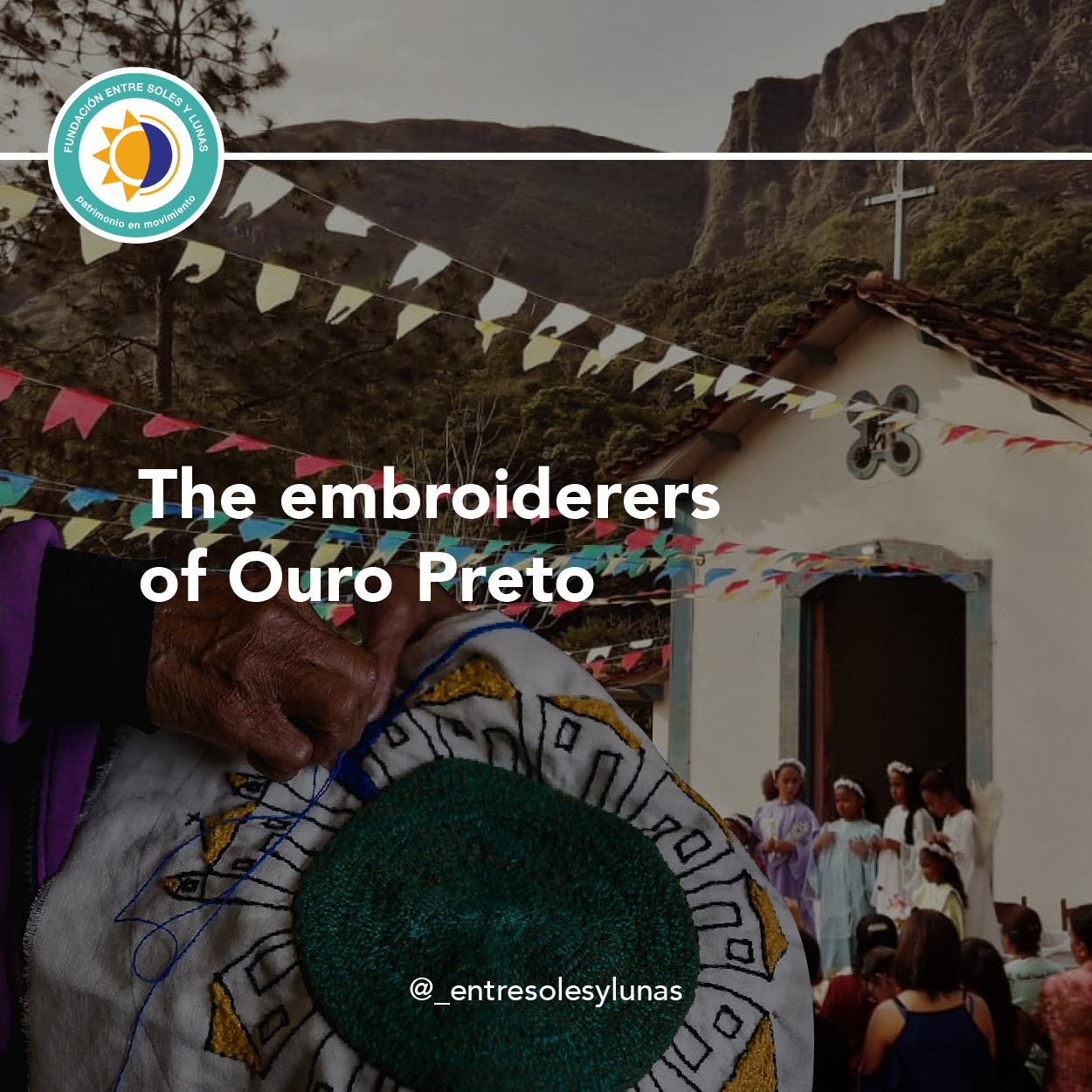
As we know, a wide range of artistic and artisanal expressions arise and are passed down around religious practices. In the history of embroidery in Ouro Preto, the imposing presence of Catholicism—with its baroque culture and garments rich in detail—introduced this technique, which was soon reinterpreted and fused with the knowledge of a community that had long preserved the ancestral tradition of working with thread. The encounter between new formats, materials, and motifs gradually gave new meaning to the practice of embroidery. This practice, often passed down within families, mostly by women, remains remarkably alive today.
To Embroider the City
There is a common purpose behind every shared practice, and that of the embroiderers of Ouro Preto seems to be related to focus on improving the lives of the women who join, offering them a fraternal and creative space. These spaces often have a solidarity-based purpose, such as raising funds through the sale of products and allocating part of the proceeds to a social cause.
Throughout the production process, the embroiderers’ inspiration leaves its mark through the styles, colors, and techniques that characterize their work. One can find designs that allude to nature, to the city’s architecture, churches, religion, or the poetry of Ouro Preto’s writers, honored in letters embroidered on tapestries or cushions.
Make History
Currently, Ouro Preto, with a population of just over 70,000 inhabitants, is home to dozens of groups and collectives of women embroiderers, who first began meeting informally to teach and keep the craft alive. Over the years, the practice of meeting to embroider, inviting relatives, sharing knowledge, food, and moments of life spread in different parts of the city.
In 2019, embroidery was recognized as Municipal Intangible Heritage . From this recognition came the public policies needed to ensure spaces for exhibitions and product sales, classes, fair circuits, dissemination, and more.
Passing Down to Honor
Traditions are flexible pillars that provide structure and support to a people’s spirit. Animated by the emotions and stories that shape them, customs and shared practices are more about love than technique. Embroidery in Ouro Preto is tied to all those mothers and grandmothers who patiently passed on the craft, while instilling in their apprentices both a love for the handmade and an appreciation for time shared with others. This is what Jacira Helena —the leader of Casa da Chita, an association of women embroiderers— recounts: “The greatest pride I take in this craft is where I learned it, because the one who taught me was a very important person in my life—my mother”.
Jacira, like so many others, is prompted by the memories of that transmission—of that loving legacy—that sustain her, and now inspire her companions to carry on the tradition of gatherings in her honor.
Sources
https://whc.unesco.org/en/list/124
https://www.ouropreto.mg.gov.br/turismo/atrativo-item/1800
https://globoplay.globo.com/v/5732979/?s=0s
https://www.ouropreto.mg.gov.br/noticia/1496


Leave a reply