
By Julieta Escala, Translated by Ángela Suárez
When mothers and grandmothers for years decide to keep their wedding dresses, special event outfits, handkerchiefs from suits or baby socks, what they are really doing is preserving part of their heritage, one that eventually becomes ours too.
Why do we choose to preserve certain clothes? Because through them we connect with our stories. Clothing speaks about people and their customs, production techniques, designs of its time. These are heritage assets that embody cultural, social and artistic values of the community and the historical moment. As objects are in direct contact with the body and exposed to environmental conditions , preservation of their materials is difficult. When clothing manages to survive the passage of centuries, the task of conservation becomes a craft that blends rigorous research with technical, historical and artistic knowledge to ensure proper treatment and restoration of the pieces.
To restore is to question
Conservation and restoration of textile heritage combines multiple disciplines and involves different stages that allow for both recognition and treatment of these garments.
Nunca el objetivo final es intervenir las piezas, sino protegerlas y acondicionarlas utilizando técnicas y materiales originales. Por eso, se realiza un estudio minucioso del contexto histórico que envolvía a las prendas al momento de ser producidas. ¿Qué método se utilizó? ¿Qué materiales? ¿Para quién estaba hecho? ¿Dónde se utilizó? ¿Durante cuánto tiempo? ¿Qué lo convierte en un bien cultural?. En definitiva, ¿por qué es importante conservarlo? y ¿de qué nos está hablando en el presente esta prenda?
Protect with technique
Textiles can be submitted to undergo different treatments to achieve their conservation, protection and recovery depending on their condition.
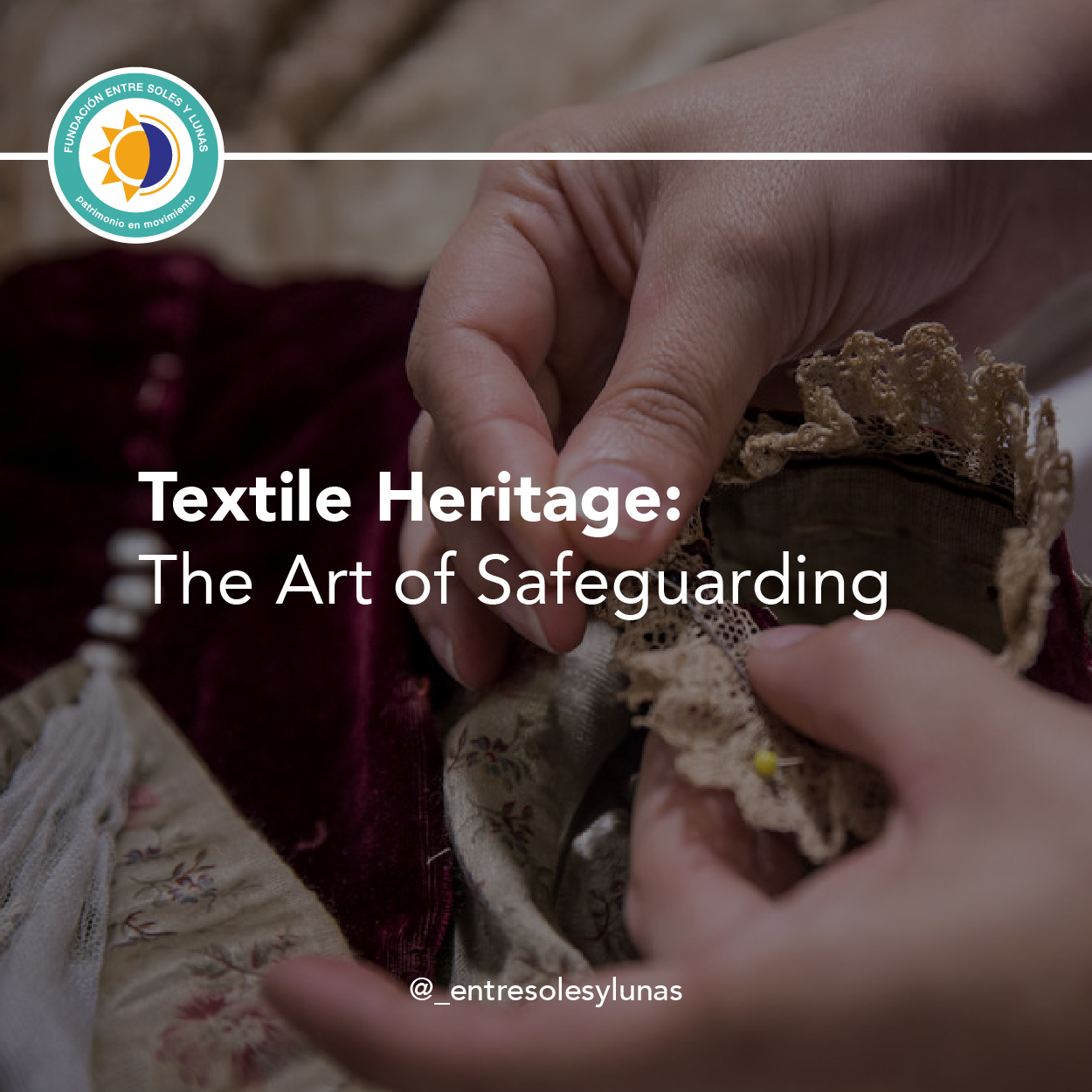
Cleaning is the first step. Always carried out gently and using methods appropriate for the to the level of deterioration. Some techniques include vacuuming, dry or wet cleaning, with mild non-invasive detergents. In this way, dust and dirt are carefully removed from the surface.
En ciertos casos se puede requerir de algún remiendo debido a que las prendas presentan hilachas o roturas y, para evitar un mayor daño, se cose según el hilo y el tipo de costura que originalmente lleve la pieza.
When the textiles are too fragile, more significant interventions may be necessary, such as adding fabric supports or conservation meshes to reduce tension and prevent further deterioration.
Lastly, one of the key factors in textile conservation is environmental control.Regulating humidity, temperature, and light is crucial to keeping the fibers in good condition. That's why exhibition and storage spaces have controlled climates and UV protection.
Care that inspires
Quizás, una forma de llevar a cabo la sostenibilidad en nuestros guardarropas sea conocer trabajos como este que enseña sobre la importancia de la conservación y el remiendo y ven en los textiles valor cultural e histórico. Quizás recuperar prendas de nuestras abuelas o madres sea parte de proteger nuestro patrimonio familiar y seguir dándole vida y circulación a la historia que nos construye. Tal vez, hacernos preguntas, aprender a cuidar nuestra ropa o saber cómo recomponerla son pasos importantes en la búsqueda de sentido y las elecciones de lo que llevamos puesto.
Sources:
https://www.youtube.com/watch?v=Rl-KJm8JJO0 Conservación-restauración de textiles e indumentaria. Instituto del Patrimonio Cultural de España.
https://www.moratamasdeu.com/destacados/conservacion-restauracion/?lang=es
https://www.mhm.cl/Conservacion_02.aspx


Leave a reply